Allentown's Best Bat Removal
We've been voted Allentown's best bat removal company the past two years!
Get in touch
Bat Experts
Rapid Response
Trained & Educated
Licensed & Certified
About Allentown Bat Removal
Welcome to allentownbatremoval.com. We are the only qualified bat removal company in Allentown, Pennsylvania. Unless you have a loft conversion in your home, the majority of people will rarely if ever look into their roof space, so if you start hearing noises coming from the ceiling then it is natural that it will be a cause for concern. Because bats are really very small creatures, the sounds of scratching and movement you hear are likely to be very faint, but there are other signs such as stains around the roof line of the property that could indicate bats being present. When it comes to resolving the problem it is important to be considerate before starting any work, as bat guano can pose a health risk to people. As your local animal removal company, our technicians have dealt with bat infestations in all manner of homes, and have the experience to deal with your problems swiftly and without fuss. They also have all of the right equipment and experience to ensure the job can be completed in the first instance. As animal experts, we know that traps are never going to be successful at dealing with a bat problem, which is why we always use exclusion methods to deal with the bat problem. Exclusion offers a more efficient way of getting rid of bats from your property, while also meaning there is no disposal of carcasses to worry about. We also support the use of bat boxes in the area near your home so that the bats have a pre-built site where they can live, and which will allow you to continue to have the insect reducing benefits of having bats living near your home. We operate 24-7-365, so don't hesitate to call us at 610-927-7792 to discuss your bat problem and schedule a fast appointment.
Residential
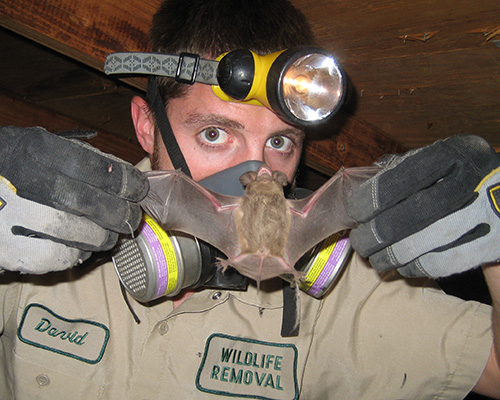
We are experts at removing bats from residential properties. Whether you have a single bat trapped in your house, a colony roosting in your attic, and/or various other problems, there is no need to worry! During our removal process, we make sure to inspect your entire home carefully, tracking down all the entrypoints bats are using to invade your place. Next, we perform a process called live exclusion (where no bats are harmed and all exit your property), then seal all entry holes completely shut. We also take care of the cleanup process after, so your home is safe and clean!
Learn MoreCommercial
Besides residential areas, we also have a wealth of experience removing bats from commercial properties! We begin by investigating the area for possible bat entrances, covering holes even as small as 1/4 of an inch. Through our live exclusion process, bats leave the building through one-way exits, and we seal up every hole afterward. Once the bats have been removed, we perform a cleanup process. This includes dealing with guano, replacing damaged insulation, and decontaminating the place.
Learn More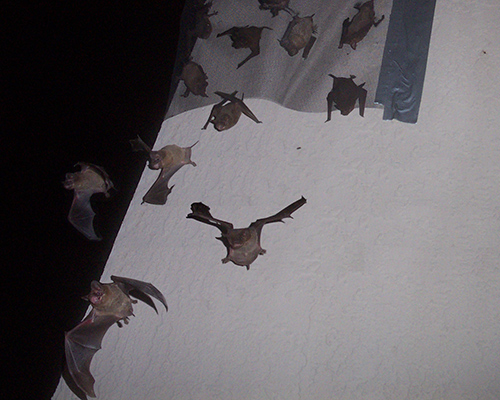
Contact us for bat removal today!
What Our Customers Say
I had a bat flying around in my house at 9pm, and CITY bat removal came right out and caught it in a net.
Sarah Lakewood
I had an annoying colony of bats stuck in my attic for a while before I finally decided to call for help. They were able to quickly and thoroughly solve the problem!
Brandon Chung
They did a great job clearing my attic of bats and didn't hurt any of the creatures.
Charlotte Demers
The technicians at CITY Bat Removal are skilled, professional, and know exactly what they're doing. Would highly recommend.
Mark O'Connor
My house stank of bats and their guano inside my wall. CITY Bat Removal not only removed the bats, they also got rid of the smell!
Alexis Ramirez
.jpg)
What is Echolocation and How do Bats Use It?
Bats make sounds in the same way that people do, but they use their sounds for rather different purposes. Although a method of communication just like ours, bats also use sounds or, rather, the echo of those sounds, to figure things out — objects and structures around them, other animals, other bats, avoiding collisions, finding insects and other food items to eat, and even how to drink whilst in mid-flight. It's called echolocation, and it's actually very similar to what dolphins use underwater — sonar.
Bats are nocturnal. They are fairly decent eyesight, predicted to be around the same kind of quality as our own, but they don't need it. They can't see in the dark just like we can't see in the dark, but with echolocation, they don't need their sense of sight.
Sounds are produced in the vocal chords, although there are a few species who use their nose. The pitch of these sounds are high — adults are not usually able to hear them, but children and pets can. The sounds are omitted and, when they hit something, they bounce back. It is that bounce-back echo that bats use to work out what is going on around them.
Using this system, bats can avoid flying into each other. If you've ever seen a colony of bats flying in and out of a building a couple of hours after sundown, you'll appreciate how well this system works. There are usually hundreds — sometimes even thousands of bats — flying around in the same small air space, and none of them ever collide. Echolocation prevents collisions.
Not just making sure the bat doesn't fly into other bats, echolocation also prevents bats from flying into buildings, into trees, and even into other animals. They use the process to find food in the same way — sending out sounds and waiting for the echo to come back, and they can also avoid becoming food in the same way. If the echo bounces back and warns the bat of a potential predator, the bat will change course to avoid being attacked.
The echo itself tells the bat a lot. It will know not only how far away the structure/tree/bat/other animal is, but also in which direction it is travelling if it is travelling, how fast it is travelling, how big the animal or structure is, whether the bat can eat it or will be in danger, whether it will eat the bat, and more.